
Table of Contents
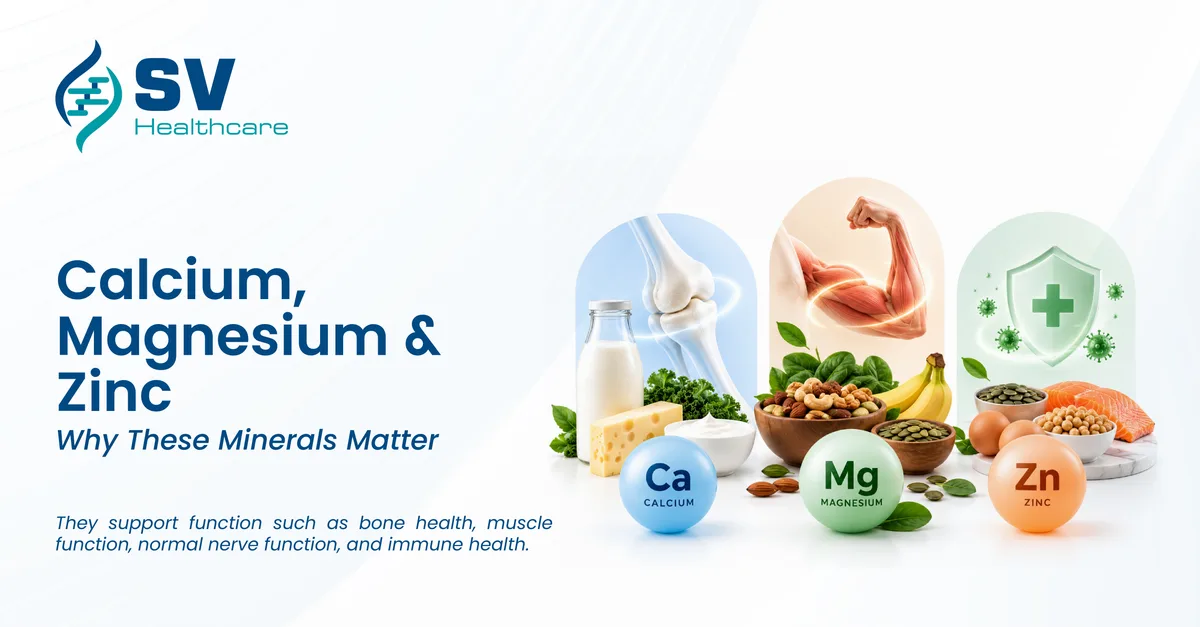
Calcium, magnesium, and zinc are essential minerals that the body needs for different functions. They support functions such as bone health, muscle function, normal nerve function, and immune health.
A balanced diet is generally the best way to obtain these minerals. However, some people may need supplements depending on their diet, age, health condition, or nutritional needs. Understanding the role of each mineral can help support overall nutritional health.
1. Why Are Calcium, Magnesium & Zinc Important?
Each mineral performs different functions in the body.
| Mineral | Main Role |
|---|---|
| Calcium | Supports bones, teeth and normal muscle function |
| Magnesium | Supports muscle, nerve and energy-related functions |
| Zinc | Supports immune function, cell growth and normal wound healing |
Getting adequate amounts of these minerals as part of a balanced diet is important for overall health.
2. Role of Calcium
Calcium is one of the most important minerals for maintaining strong bones and teeth.
It also contributes to:
- Normal muscle function
- Normal nerve transmission
- Normal blood clotting
- Maintaining strong bones
Food Sources of Calcium
Good dietary sources include:
- Milk and dairy products
- Yogurt
- Cheese
- Calcium-fortified foods
- Certain leafy green vegetables
- Some fish eaten with edible bones
Adequate calcium intake is particularly important during periods of growth and for maintaining bone health throughout adulthood.
3. Role of Magnesium
Magnesium is involved in many processes throughout the body.
It contributes to:
- Normal muscle function
- Normal nerve function
- Energy metabolism
- Maintaining normal bones
- Normal electrolyte balance
Food Sources of Magnesium
Magnesium can be obtained from:
- Nuts and seeds
- Whole grains
- Legumes
- Green leafy vegetables
- Some fruits and vegetables
A varied diet can help provide magnesium along with other essential nutrients.
4. Role of Zinc
Zinc is an essential mineral involved in several important body functions.
It supports:
- Normal immune function
- Cell growth and division
- Normal wound healing
- Normal metabolism
- Maintenance of skin and other tissues
Food Sources of Zinc
Common sources include:
- Meat and poultry
- Fish and seafood
- Eggs
- Dairy products
- Nuts and seeds
- Legumes
The amount of zinc available from plant foods can vary because certain compounds may reduce zinc absorption.
5. Food Sources of Calcium, Magnesium & Zinc
A balanced diet can provide a combination of these minerals.
| Mineral | Examples of Food Sources |
|---|---|
| Calcium | Milk, yogurt, cheese, fortified foods |
| Magnesium | Nuts, seeds, whole grains, leafy greens |
| Zinc | Meat, seafood, eggs, legumes, nuts |
Choosing a variety of nutrient-rich foods is generally a practical way to support mineral intake.
6. When Are Supplements Considered?
Mineral supplements may be considered when dietary intake is insufficient or when a healthcare professional identifies an increased nutritional need.
Supplementation may depend on factors such as:
- Age
- Dietary pattern
- Nutritional status
- Certain health conditions
- Absorption problems
- Pregnancy or other life stages
- Use of certain medicines
Supplements should complement a balanced diet rather than automatically replace it.
7. Why Dosage and Individual Needs Matter
More of a mineral is not always better for you.
Taking excessive amounts of calcium, magnesium, or zinc can cause unwanted effects and may interact with certain medicines or other supplements.
For this reason:
- Follow the recommended serving size or a healthcare professional's advice.
- Avoid taking multiple mineral supplements unless necessary.
- Check the amount of each mineral in combination products.
- Discuss long-term or high-dose supplementation with a healthcare professional before use.
Individual nutritional needs can vary, so the appropriate supplement and dosage may differ from person to person.
8. Frequently Asked Questions
What are the benefits of calcium, magnesium and zinc?
Can I get these minerals from food?
Do I need a calcium, magnesium and zinc supplement?
Can I take all three minerals together?
Is taking more minerals better?
9. Conclusion
Calcium, magnesium, and zinc each play important roles in maintaining normal body functions. Calcium supports bones and teeth, magnesium supports muscle and nerve functions, and zinc supports immune function and normal cellular processes.
A balanced and varied diet should be the foundation of mineral nutrition. When supplements are needed, the appropriate dosage and formulation should be considered based on individual needs.